
How to Understand Bible Context Without Extensive Theological Training
Passage is the Bible app that walks with you. Join Christians around the world growing in faith, one verse at a time.


I'll be honest—most of us have sat in church or Bible study nodding along while secretly having no clue what the pastor meant about "historical context" or why it mattered that Paul wrote to the Corinthians versus the Romans. I used to think you needed a seminary degree to actually understand what you were reading. Turns out, that's complete nonsense. I've discovered some surprisingly simple ways to grasp Biblical context that don't require years of theological training.

Start With the Paragraph Before and After Your Target Verse
I used to jump straight to whatever verse someone quoted on social media, but that's like walking into the middle of a movie and trying to figure out the plot. Now I always read at least one paragraph before and after my target verse, and it's honestly shocking how much this changes things.
Take Jeremiah 29:11 - "'For I know the plans I have for you,' declares the Lord..." Everyone quotes it as God's personal promise to them. But read the paragraph before, and you'll see it's specifically addressed to Jewish exiles in Babylon. The verse after talks about 70 years of captivity. Suddenly it's not a graduation card verse anymore.
This simple habit has saved me from countless embarrassing misquotes. Your phone's Bible app makes this ridiculously easy - just scroll up and down a bit before you interpret anything.
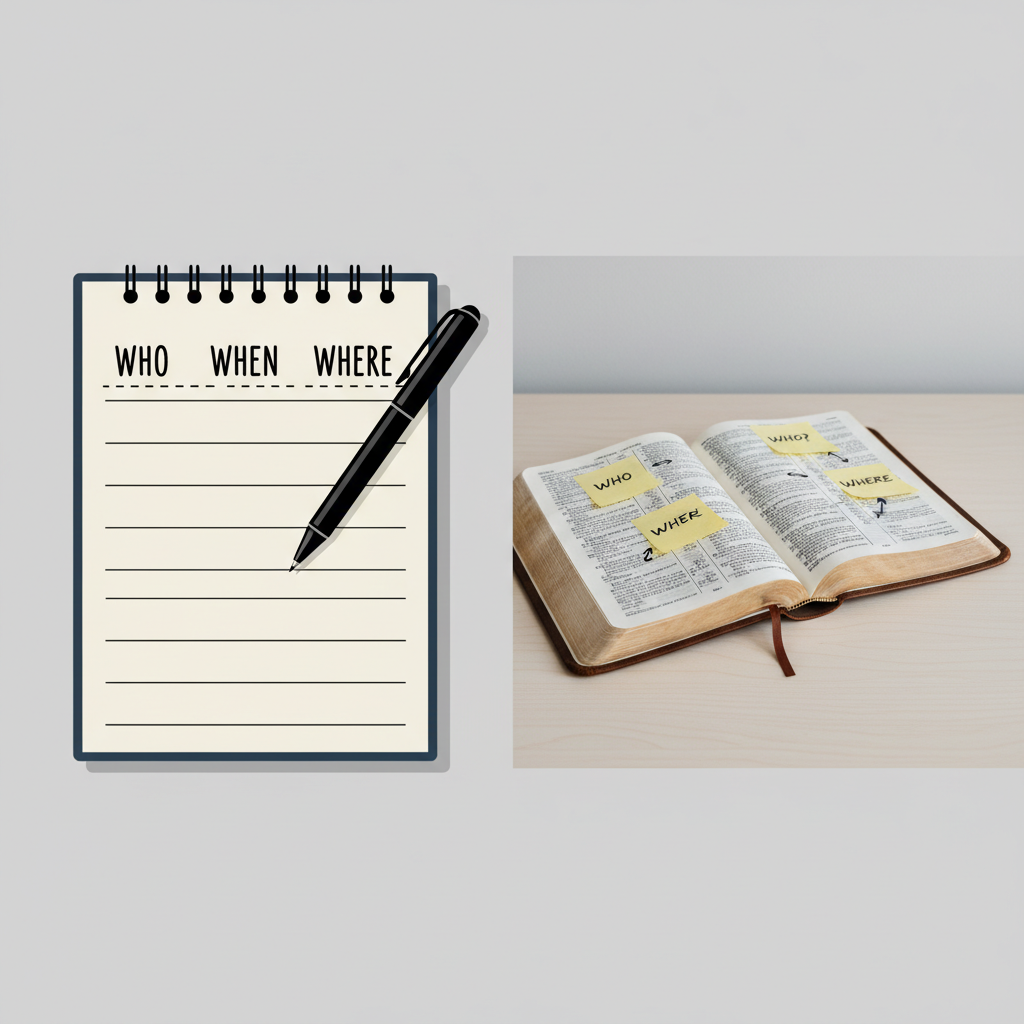
Ask Three Questions Every Detective Would Use
Skeptical Reader: "This detective thing sounds gimmicky. How's that actually helpful for Bible reading?"
Experienced Reader: "I thought the same thing until I started using it. When I hit a confusing passage, I literally ask: Who's talking? When did this happen? What's the situation? It's stupidly simple but it works."
Skeptical Reader: "Give me a real example."
Experienced Reader: "Take Jesus saying 'I didn't come to bring peace, but a sword.' Sounds violent until you ask the questions. Who's he talking to? His disciples. When? Right before sending them out to preach. What's happening? He's warning them they'll face family rejection. Suddenly it makes sense—he's preparing them for opposition, not telling them to grab weapons."
Skeptical Reader: "That's actually helpful. But isn't this just basic reading comprehension?"
Experienced Reader: "Exactly! That's why it works for anyone."

Cross-Reference Like Following Breadcrumbs in Your Kitchen
I've found that Bible cross-references work exactly like following a recipe that calls for "the spice blend from page 47." When Jesus mentions "living water" in John 4, my Bible's margin note points me to Isaiah 55:1. Suddenly I'm connecting Old Testament promises to New Testament conversations.
What works for me: I follow three cross-references maximum per sitting. More than that and I'm lost in rabbit holes instead of understanding the original passage. Start with the obvious connections—they're usually the most helpful anyway.
Quick Answers
Why do Bible verses seem to contradict each other when I read them?
From what I've seen, most apparent contradictions disappear once you figure out who's talking to whom and when. I always check the chapter headings or flip back a few pages to see if it's a different book, different audience, or if someone's quoting what others believe versus stating truth - that alone clears up like 80% of confusing passages.
Should I read the whole chapter or can I just focus on the verse I'm studying?
I'd recommend reading at least the paragraph before and after any verse you're studying, because verses are like sentences pulled from the middle of a conversation. When I first started, I'd grab random verses that sounded inspiring but completely missed what the author was actually trying to say - it's like overhearing "that's a terrible idea" without knowing what "that" refers to.
How can I tell if a Bible story is meant to be taken literally or as a lesson?
Look at how the author presents it - if they're listing genealogies and specific dates, they're probably recording history, but if it starts with "there was a man who..." it might be a parable. I've found that asking "what's the main point the writer is trying to make?" matters way more than getting hung up on whether every detail happened exactly as described.
My Go-To Game Plan
Here's what I'd actually recommend: Start with the ESV Study Bible for solid notes, then grab Blue Letter Bible's free app for quick word lookups. BibleProject's videos explain the big picture stuff without getting too academic. My honest take? You don't need seminary to get this right—just curiosity and the right tools in your back pocket.

