
How to Make Bible Study Enjoyable Instead of Overwhelming
Passage is the Bible app that walks with you. Join Christians around the world growing in faith, one verse at a time.


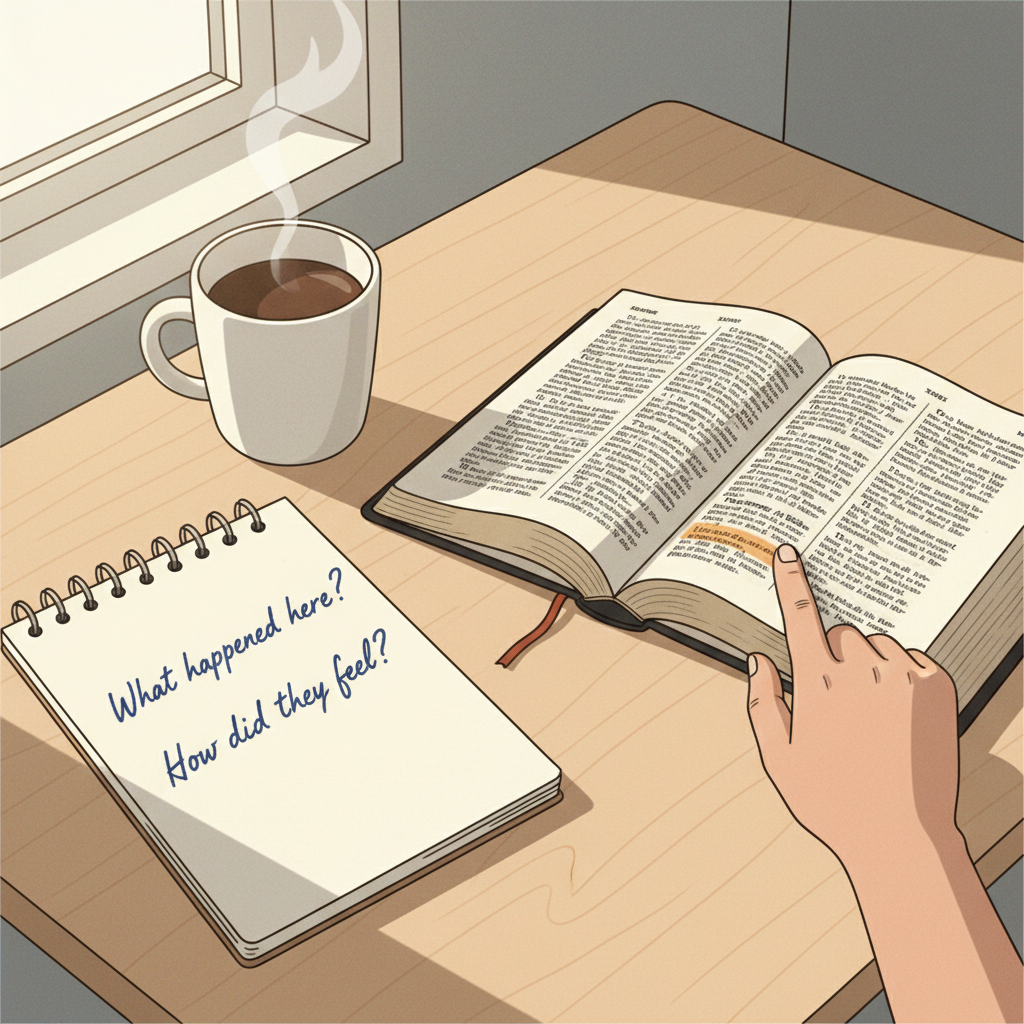
I used to approach my Bible like it was a textbook I needed to master for some cosmic final exam. Pages full of highlighted verses, color-coded tabs, study guides stacked everywhere. I felt guilty when I'd fall asleep reading Leviticus for the third time. But here's what I've discovered: when you shift from cramming information to actually connecting with the text, something changes. Your morning coffee becomes a conversation starter with ancient wisdom, and suddenly those intimidating chapters feel more like letters from an old friend.
Start With Stories, Not Study Guides
1. Pick one story and camp out there for a week. I used to bounce around trying to cover massive chunks of scripture. Total disaster. Now I'll spend five days just on David and Goliath, noticing new details each time. Way more satisfying than racing through three chapters and remembering nothing.
2. Read it like you're watching a movie. Who's the villain? What's the main character feeling? I started asking these questions with the story of Jonah and suddenly realized how funny parts of it actually are. The guy's literally pouting under a plant.
3. Skip the study notes at first. I know this sounds backwards, but commentaries killed my curiosity for years. Read the story fresh, form your own questions, then look up what smarter people think. You'll actually care about their insights instead of just collecting information.

Five Minutes Beats Five Hours Every Time
Myth: Real Bible study requires at least an hour to be worthwhile.
Reality: I've gotten more out of consistent five-minute sessions than those marathon Sunday afternoon crashes where I'd try to read three chapters and retain nothing.
Here's what I actually do now: I pick one verse and sit with it during my morning coffee. Maybe I'll notice a word that seems odd, or wonder why the writer chose that particular example. Yesterday I spent five minutes just thinking about why Jesus used a mustard seed instead of, say, an acorn.
Those little daily touches stick with me way better than the guilt-ridden hour-long sessions I used to force myself through. Plus, when something really grabs me during those five minutes, I naturally want to keep going. The key is making it so easy that skipping feels harder than doing it.

Turn Questions Into Conversations
I used to think Bible study meant finding the "right" answers to predetermined questions. Wrong approach. The magic happens when you let genuine curiosity lead.
Instead of asking "What does this mean?" try "Why would Jesus say this here?" or "How would the disciples have felt hearing this?" These kinds of questions open up actual dialogue with the text rather than hunting for textbook answers.
I've found that starting with "I wonder..." changes everything. "I wonder why Paul sounds frustrated in this letter" feels way more engaging than "Identify Paul's main argument."
The best conversations happen when you notice contradictions or confusing parts. Don't skip over them—lean in. Those moments of "Wait, this doesn't make sense" are where real understanding begins. Questions should make you more curious, not less.
Glossary of Important Concepts:
Genuine Curiosity - Approaching the Bible with authentic wonder rather than trying to find predetermined "correct" answers
Dialogue with Text - Engaging scripture as a conversation partner rather than a textbook to be decoded
Wonder-Based Questions - Starting inquiries with "I wonder..." to create openness rather than pressure for immediate answers
Productive Confusion - Embracing moments when scripture doesn't make immediate sense as opportunities for deeper understanding
What People Ask
Why does my mind wander every time I try to read the Bible?
From what I've seen, this happens because most people try to power through long chapters like it's homework, which honestly makes anyone's brain check out. I'd recommend starting with just one or two verses at a time and actually thinking about what they mean for your day - it's way more engaging than trying to get through entire books.
Should I feel bad if I don't understand what I'm reading in the Bible?
Not at all - I spent years pretending I understood passages that made zero sense to me, which just made Bible study feel fake and frustrating. The truth is, some parts are genuinely confusing without context, so I always keep a simple study Bible or app handy to explain the weird cultural stuff that doesn't translate to modern life.
Your Bible Study Cheat Sheet
Here's what I'd do: start with 10 minutes, pick one verse, and ask "what does this mean for me today?" Skip the pressure to understand everything perfectly. My take? God's more interested in your heart showing up than your brain having all the answers.
Save this somewhere you'll actually see it.

